To embed our video on your website copy and paste the code below:
<iframe src="https://www.youtube.com/embed/c2PNZfOxRNk?modestbranding=1&rel=0" width="970" height="546" frameborder="0" scrolling="auto" allowfullscreen></iframe>
Ray Le Maistre, TelecomTV (00:04):
So we're in London for FutureNet World 2026. I'm here with Jannicke Hilland. She is EVP and Head of Digital Infrastructure for the Nordics at Telenor. Jannicke, thanks so much for joining us today. Pleasure to see you.
Jannicke Hilland, Telenor (00:17):
Thank you for inviting me.
Ray Le Maistre, TelecomTV (00:20):
So Telenor is pretty well known for being one of the first operators to invest in an AI factory, and there's an awful lot of interest in this. But can you give us the background and tell us why Telenor went down this route? What are the trends that led you to make this decision?
Jannicke Hilland, Telenor (00:40):
If we look at the trends we see in the world today, there are three main global trends. One is the geopolitical situation. The second is the rapid development of AI. And the third is sustainability. And on the geopolitical side, we see that there are threats, and there are wars, there are conflicts. We have to live in this. And us as a telecom operator, we are a prerequisite in order to keep the society going. We are dealing with critical infrastructure and critical services. So this has to work in peace and in war. And we see that the traditional partners that we have, the relationships are challenged. So that's one aspect of it. We see a heightened security threat we have to deal with. So there are a lot of things that we have to deal with. But at the same time, there are opportunities in this for us as a telecom. The second is the AI. We spent years and years in order to digitise, automate, be more efficient, give the best possible services to our customers. And we use now the AI revolution to lift that even further. So we use AI internally, but we also use it towards our customers to give a good customer experience. And the third thing is on sustainability. The good thing about digital infrastructure and services is that it's a prerequisite in the green shift. The EU talks about transition. Digital society is a prerequisite. But we have to work on energy efficiency and so forth. And now everybody's concerned with conflicts and war and the geopolitical situation. But if you look at the UN risks in a 10-year perspective, the top risks are all related to climate and climate changes and climate adaptation. So we have to bear that in mind. So in all that, Telenor is working on — we work on connectivity. That's our core business and it will be. But now we're working on the compute side. So what we do, we are developing infrastructure and infrastructure services within the landscape of sovereign, secure and sustainable. And that is to care for our critical workloads with more control and national control and national resilience. So when you talk about what you asked me for — what is this? We work on three things. We work on the AI factory, you asked about. We work on a sovereign cloud solution. And we work on sovereign data centres. We are demand driven. We work closely with our customers and we scale on demand.
Ray Le Maistre, TelecomTV (03:30):
So I was going to ask about that, of course, because there's a long tradition in the telecom sector of build it and they will come. And sometimes they don't. But there is definite demand and already use for the services you're providing.
Jannicke Hilland, Telenor (03:58):
If we take the AI factory, we scale, as I said, we scale with the customers. We work with partners and we partner with customers in order to secure that we have a product that the customers need. So it's quite interesting, actually, because I think we were all getting there using the AI and using the services. But what we see — the first movers on this are the startups, the early startups. Now we see that more and more customers come from the public sector and also the enterprises. So we have customers from different sectors, from different particular societal groups and functions on our AI factory. So what they do is that they buy capacity, or they lease capacity and services from us on this infrastructure.
Ray Le Maistre, TelecomTV (04:46):
OK, so it's kind of bundled together then. It's like they're getting a package of services from Telenor. Is that right?
Jannicke Hilland, Telenor (04:53):
Yes, they can do it. They could choose to go only on the AI factory or they can choose to bundle with other services because we have other services that the customers need. And now we've just started on the Sovereign Cloud initiative and that will also be part of this going forward.
Ray Le Maistre, TelecomTV (05:11):
OK. What is it, do you think, that would lead, whether it's a public or private enterprise, to work with Telenor on this rather than a Google or an AWS or an Azure? Because they have massive scale and probably lower costs. So there must be something attracting these customers to work with Telenor.
Jannicke Hilland, Telenor (05:36):
Yes, I think Telenor and also our customers — most of our workloads will be in public cloud today and in the future. What we are working on is the workload which is critical and it's confidential. What we have experienced with the geopolitical situation is that that workload has to be under national control and with a sovereignty aspect in it. And we see that also our customers are more and more getting into that landscape. So I think there will be a divided, a split cloud solution — public for most of our loads and sovereign for critical loads.
Ray Le Maistre, TelecomTV (06:20):
And as these services develop, what does that mean in terms of the way that you are running and managing and operating your digital platforms and digital services? Is it easy to scale up and down? Like if you get a lot of demand, is it easy to scale up? What kind of impact does that have on other things that you're doing?
Jannicke Hilland, Telenor (06:43):
Our clear strategy is to scale on demand. And it has to be — of course, we are a telco, we need to run a profitable business. So it has to be profitable demand and then we scale.
Ray Le Maistre, TelecomTV (07:06):
Is there an impact on the other operations within the Telenor group or other aspects of the digital platforms that you run?
Jannicke Hilland, Telenor (07:14):
How we spend our money is always a discussion in the enterprise. And we do that very carefully by transforming and further developing our core business. But in addition, doing these new services within compute, where we see there is a market demand.
Ray Le Maistre, TelecomTV (07:39):
Are you seeing demand just continue to rise and rise? Is this something that as some companies see others using your services, they maybe think, okay, this is something that we know we can trust because others are using it? Is there like that rolling effect?
Jannicke Hilland, Telenor (07:58):
We have seen that a lot of customers have gone into a different mindset on this. And we see more and more of the customers require a part of their workload within this architecture.
Ray Le Maistre, TelecomTV (08:15):
And do you have other operators come to talk to you to ask you how are you doing this? Because they are thinking of doing the same kind of thing?
Jannicke Hilland, Telenor (08:24):
Yes, we do. And I think, honestly, I think this is a telco issue. We should work together on this because we are in different markets and we should work together on how these are set up. So we love to share our experience and we love to work together with partners. It could be telco partners or it could be other technology partners.
Ray Le Maistre, TelecomTV (08:45):
Yeah, no, absolutely. Well, I'm sure there's going to be a lot of interest. I mean, sovereign already here today at this event has been one of the key themes. There's a lot of interest. So everybody's going to be looking at the first movers to gain from the experience. And obviously, Telenor is one of those. So, Jannicke, thanks so much for telling us what you're doing and how it's working out. And we look forward to seeing how this develops for Telenor. Thank you very much.
Jannicke Hilland, Telenor (09:10):
Thank you
So we're in London for FutureNet World 2026. I'm here with Jannicke Hilland. She is EVP and Head of Digital Infrastructure for the Nordics at Telenor. Jannicke, thanks so much for joining us today. Pleasure to see you.
Jannicke Hilland, Telenor (00:17):
Thank you for inviting me.
Ray Le Maistre, TelecomTV (00:20):
So Telenor is pretty well known for being one of the first operators to invest in an AI factory, and there's an awful lot of interest in this. But can you give us the background and tell us why Telenor went down this route? What are the trends that led you to make this decision?
Jannicke Hilland, Telenor (00:40):
If we look at the trends we see in the world today, there are three main global trends. One is the geopolitical situation. The second is the rapid development of AI. And the third is sustainability. And on the geopolitical side, we see that there are threats, and there are wars, there are conflicts. We have to live in this. And us as a telecom operator, we are a prerequisite in order to keep the society going. We are dealing with critical infrastructure and critical services. So this has to work in peace and in war. And we see that the traditional partners that we have, the relationships are challenged. So that's one aspect of it. We see a heightened security threat we have to deal with. So there are a lot of things that we have to deal with. But at the same time, there are opportunities in this for us as a telecom. The second is the AI. We spent years and years in order to digitise, automate, be more efficient, give the best possible services to our customers. And we use now the AI revolution to lift that even further. So we use AI internally, but we also use it towards our customers to give a good customer experience. And the third thing is on sustainability. The good thing about digital infrastructure and services is that it's a prerequisite in the green shift. The EU talks about transition. Digital society is a prerequisite. But we have to work on energy efficiency and so forth. And now everybody's concerned with conflicts and war and the geopolitical situation. But if you look at the UN risks in a 10-year perspective, the top risks are all related to climate and climate changes and climate adaptation. So we have to bear that in mind. So in all that, Telenor is working on — we work on connectivity. That's our core business and it will be. But now we're working on the compute side. So what we do, we are developing infrastructure and infrastructure services within the landscape of sovereign, secure and sustainable. And that is to care for our critical workloads with more control and national control and national resilience. So when you talk about what you asked me for — what is this? We work on three things. We work on the AI factory, you asked about. We work on a sovereign cloud solution. And we work on sovereign data centres. We are demand driven. We work closely with our customers and we scale on demand.
Ray Le Maistre, TelecomTV (03:30):
So I was going to ask about that, of course, because there's a long tradition in the telecom sector of build it and they will come. And sometimes they don't. But there is definite demand and already use for the services you're providing.
Jannicke Hilland, Telenor (03:58):
If we take the AI factory, we scale, as I said, we scale with the customers. We work with partners and we partner with customers in order to secure that we have a product that the customers need. So it's quite interesting, actually, because I think we were all getting there using the AI and using the services. But what we see — the first movers on this are the startups, the early startups. Now we see that more and more customers come from the public sector and also the enterprises. So we have customers from different sectors, from different particular societal groups and functions on our AI factory. So what they do is that they buy capacity, or they lease capacity and services from us on this infrastructure.
Ray Le Maistre, TelecomTV (04:46):
OK, so it's kind of bundled together then. It's like they're getting a package of services from Telenor. Is that right?
Jannicke Hilland, Telenor (04:53):
Yes, they can do it. They could choose to go only on the AI factory or they can choose to bundle with other services because we have other services that the customers need. And now we've just started on the Sovereign Cloud initiative and that will also be part of this going forward.
Ray Le Maistre, TelecomTV (05:11):
OK. What is it, do you think, that would lead, whether it's a public or private enterprise, to work with Telenor on this rather than a Google or an AWS or an Azure? Because they have massive scale and probably lower costs. So there must be something attracting these customers to work with Telenor.
Jannicke Hilland, Telenor (05:36):
Yes, I think Telenor and also our customers — most of our workloads will be in public cloud today and in the future. What we are working on is the workload which is critical and it's confidential. What we have experienced with the geopolitical situation is that that workload has to be under national control and with a sovereignty aspect in it. And we see that also our customers are more and more getting into that landscape. So I think there will be a divided, a split cloud solution — public for most of our loads and sovereign for critical loads.
Ray Le Maistre, TelecomTV (06:20):
And as these services develop, what does that mean in terms of the way that you are running and managing and operating your digital platforms and digital services? Is it easy to scale up and down? Like if you get a lot of demand, is it easy to scale up? What kind of impact does that have on other things that you're doing?
Jannicke Hilland, Telenor (06:43):
Our clear strategy is to scale on demand. And it has to be — of course, we are a telco, we need to run a profitable business. So it has to be profitable demand and then we scale.
Ray Le Maistre, TelecomTV (07:06):
Is there an impact on the other operations within the Telenor group or other aspects of the digital platforms that you run?
Jannicke Hilland, Telenor (07:14):
How we spend our money is always a discussion in the enterprise. And we do that very carefully by transforming and further developing our core business. But in addition, doing these new services within compute, where we see there is a market demand.
Ray Le Maistre, TelecomTV (07:39):
Are you seeing demand just continue to rise and rise? Is this something that as some companies see others using your services, they maybe think, okay, this is something that we know we can trust because others are using it? Is there like that rolling effect?
Jannicke Hilland, Telenor (07:58):
We have seen that a lot of customers have gone into a different mindset on this. And we see more and more of the customers require a part of their workload within this architecture.
Ray Le Maistre, TelecomTV (08:15):
And do you have other operators come to talk to you to ask you how are you doing this? Because they are thinking of doing the same kind of thing?
Jannicke Hilland, Telenor (08:24):
Yes, we do. And I think, honestly, I think this is a telco issue. We should work together on this because we are in different markets and we should work together on how these are set up. So we love to share our experience and we love to work together with partners. It could be telco partners or it could be other technology partners.
Ray Le Maistre, TelecomTV (08:45):
Yeah, no, absolutely. Well, I'm sure there's going to be a lot of interest. I mean, sovereign already here today at this event has been one of the key themes. There's a lot of interest. So everybody's going to be looking at the first movers to gain from the experience. And obviously, Telenor is one of those. So, Jannicke, thanks so much for telling us what you're doing and how it's working out. And we look forward to seeing how this develops for Telenor. Thank you very much.
Jannicke Hilland, Telenor (09:10):
Thank you
Please note that video transcripts are provided for reference only – content may vary from the published video or contain inaccuracies.
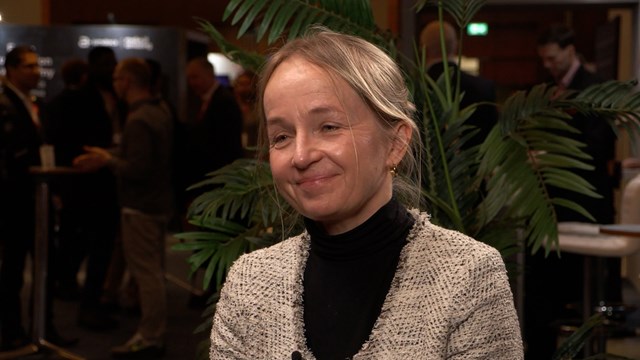
Jannicke Hilland, EVP and Head of Infrastructure, Telenor
Jannicke Hilland, executive VP at Telenor with responsibility for digital infrastructure in the Nordics, discusses why the operator decided to invest in its own AI infrastructure, explains how it is scaling with its customers, outlines sovereign services trends and much more.
Recorded April 2026
Email Newsletters
Sign up to receive TelecomTV's top news and videos, plus exclusive subscriber-only content direct to your inbox.