To embed our video on your website copy and paste the code below:
<iframe src="https://www.youtube.com/embed/uMv1_3NT6oQ?modestbranding=1&rel=0" width="970" height="546" frameborder="0" scrolling="auto" allowfullscreen></iframe>
James Pearce, TelecomTV (00:05):
Welcome to TelecomTV. I'm James Pearce and I'm here at FutureNet World. I'm delighted to be joined today by Neil McRae, who is the CTIO of CityFibre. Neil, welcome as ever.
Neil McRae, CityFibre (00:16):
Thanks for having me.
James Pearce, TelecomTV (00:17):
Let's dive straight in. We're going to talk about AI and we're going to talk about operational AI. Why don't you give our viewers an idea as to where the industry is at in terms of its deployment of AI in the operational sense?
Neil McRae, CityFibre (00:29):
Yeah, sure. So we're all in slightly different places because we're different types of operator. You've got the legacy operators and then you've got the newer operators like CityFibre where we don't have any legacy. So our focus is much more on how can we serve the customer and how can we bring AI to the customer? And an example of that is one of the things we're trialling right now — as we're putting in a new service into a customer's premise, be it business or consumer — is giving the engineer the ability to use voice to sign off his tasks. So if you imagine: the cabling's okay, yes, check. The safety of the electricity is there, check. So instead of going through an iPad, which can take 10, 15 minutes, we're actually trialling and deploying voice solutions so that the engineer can do all that sign-off once he's completed his work.
(01:25):
The great thing about that for the customer — you know what it's like when you've had a new thing delivered, you kind of want the delivery guy to go so you can go play with it. Same with fibre — customers say "Hey, get out, I want to plug my Xbox in and I want to play games." So this allows our engineers to get out of the customer's way, with a really good sense that we've completed the job. And that saves us time in the customer's premise, which means we can get to the next customer quicker and we can just improve that whole delivery experience. We're also using AI — and this is where some of the legacy operators are using AI as well — in our fibre exchanges, where we're using visual-based AI to do anomaly detection of our fibre patching and our equipment, to ensure that our inventory matches up with what's actually in one of our fibre exchanges.
(02:18):
There are engineers coming and going all the time. They make changes. Sometimes a port's not working or an optic's not working, so you change it. And by doing this photography and using AI to decode it, we can make sure that we understand the network as it is in real time. And that really pays off when you have a network problem or you're trying to debug something and you've got really good confidence that what you're looking at is actually what's out there. We're also looking at AI to enhance all of our processes. And actually, one of the great things AI is good at is knowing when to use AI. So we're using AI-based process mapping to say, "Actually, here's a piece of a process where you could easily use AI to take time out of it, to speed it up or to improve accuracy." And those are the sorts of things that many telcos are working on in terms of the customer experience.
James Pearce, TelecomTV (03:19):
It sounds like you're doing quite a lot. So in terms of the kind of project, how far along would you say you are? Or is it something where the end date just keeps moving back?
Neil McRae, CityFibre (03:28):
Yeah, I don't think with AI we're ever going to be finished. I think it's one of those things where we'll always have something new to do. And that's one of the things I love about our industry — we've always got the next thing or the new thing to do. So one of the things we've just done — we've launched our new eight-and-a-half gigabit per second product, first in the UK — and we're using AI to measure how well that product is performing, both on the network and also with our channel partners, and trying to use AI to get feedback. I think everything that we do in telco, there will be an AI or good old-fashioned automation opportunity to improve the experience. And as we really push on that customer experience focus, it becomes what I call a game of inches.
(04:17):
There's no silver bullet to improving customer experience. It's doing a lot of little things incredibly well. And that's where AI is really helping us understand where are those pieces of the journey that we can improve and drive improvements to, so that customers love dealing with telcos. My goal before I leave this industry is to ensure customers love working with telcos, because we're actually a great bunch to work with. We've just got to become a bit more customer-centric, and AI is really helping us drive that journey and making what we do more understandable for the customer.
James Pearce, TelecomTV (04:52):
So is that the starting point for you? When you go to judge what technologies you might want to try — is it "this could solve this for the customer" or "this could do this"? What's the main thinking when you decide what you're going to do next?
Neil McRae, CityFibre (05:05):
Yeah, I think understanding the customer's pain points and the issues that frustrate customers, getting a lot of detail about the things that niggle customers. So one of the things I learned was when you've delivered a service, customers are really keen to get back to normal and get the field engineer out. So if we can make that happen quicker so that they can move on, why wouldn't you do that? I always start with the customer, and I find that the more you do that, the more great ideas you find — customers are full of great ideas — and then you can take them and deploy them. But obviously in terms of technology, inside CityFibre as a business, I have customers that have pain points that need help — with complaints, with billing. And we have a team that goes in and tries to understand the problem and then looks at what's the best solution for it.
(06:00):
Increasingly, that's becoming more and more AI-focused. And actually most of our strategy around AI at CityFibre is to leverage our technology partners. They've got an amazing set of capabilities that we are starting to use — managing agents, bringing agents together, using agents to align different sources of data. And I think that's a really strong capability that then gives our downstream partners the ability to sell more to their customers. We're a wholesale player, so the more information we give to our downstream partners, the better it enables them to sell CityFibre to their end customers.
James Pearce, TelecomTV (06:38):
Can you point to any challenges or difficulties that you've had as you've been doing these AI deployments that you've managed to overcome — or even if you haven't managed to overcome them — that the industry could learn lessons from?
Neil McRae, CityFibre (06:50):
I think the biggest challenge is mindset. And this is a kind of conundrum of being in technology. For me, when I hear the word technology, I think about what's new — it's just kind of ingrained in me. And AI is another piece of technology, and embracing it, understanding it, and learning it is crucially important. And actually at CityFibre, we really believe in building the capabilities of all of our people. So we have an AI hub inside CityFibre where anyone can learn how to use AI. We're obviously working with our partner Microsoft with Copilot, which has given people a really good and a safe way to enter that AI world. Of course, some of the big challenges — secure AI and data protection, ensuring that we look after our network and our customers and that our data is secure — are risks with AI that every day we are thinking about and trying to improve upon.
(08:03):
So I think if you've got the right mindset, AI is a great thing to learn. No matter where you are in your career — whether you're new to this industry or you've been in it 40 years — there is a huge amount to learn. And the great thing about it is the AI will teach you itself. It's almost self-learning in how you use it. But I always remind people: AI is about knowledge, and we have to equip AI with our knowledge as telcos so that we've got the right AI doing the right thing for our customers and our stakeholders.
James Pearce, TelecomTV (08:35):
Is there anything on the roadmap that's really exciting you that you can give us some insight into — something that you're looking to launch or something that's coming up?
Neil McRae, CityFibre (08:44):
Look, there's a lot going on in the GPON space that we're working on — watch this space. And actually what that's really driving is a different way of thinking around the core and backbone of our network. We're getting close to deploying 400 gigabits per second type interfaces. They work very differently. If you have a problem on a 100 gig link, it's either on or off. With 400 gig, they tend to degrade before they actually disappear. So we're trying to learn all those new technologies so that as we build our network and scale up with our customers, we've got the right technology — but more importantly, that we present our customers with the right service experience so that they can sell knowing that we're a reliable partner.
James Pearce, TelecomTV (09:36):
Brilliant. Neil, thank you so much for speaking to us today on TelecomTV.
Neil McRae, CityFibre (09:40):
Thanks for having me.
Welcome to TelecomTV. I'm James Pearce and I'm here at FutureNet World. I'm delighted to be joined today by Neil McRae, who is the CTIO of CityFibre. Neil, welcome as ever.
Neil McRae, CityFibre (00:16):
Thanks for having me.
James Pearce, TelecomTV (00:17):
Let's dive straight in. We're going to talk about AI and we're going to talk about operational AI. Why don't you give our viewers an idea as to where the industry is at in terms of its deployment of AI in the operational sense?
Neil McRae, CityFibre (00:29):
Yeah, sure. So we're all in slightly different places because we're different types of operator. You've got the legacy operators and then you've got the newer operators like CityFibre where we don't have any legacy. So our focus is much more on how can we serve the customer and how can we bring AI to the customer? And an example of that is one of the things we're trialling right now — as we're putting in a new service into a customer's premise, be it business or consumer — is giving the engineer the ability to use voice to sign off his tasks. So if you imagine: the cabling's okay, yes, check. The safety of the electricity is there, check. So instead of going through an iPad, which can take 10, 15 minutes, we're actually trialling and deploying voice solutions so that the engineer can do all that sign-off once he's completed his work.
(01:25):
The great thing about that for the customer — you know what it's like when you've had a new thing delivered, you kind of want the delivery guy to go so you can go play with it. Same with fibre — customers say "Hey, get out, I want to plug my Xbox in and I want to play games." So this allows our engineers to get out of the customer's way, with a really good sense that we've completed the job. And that saves us time in the customer's premise, which means we can get to the next customer quicker and we can just improve that whole delivery experience. We're also using AI — and this is where some of the legacy operators are using AI as well — in our fibre exchanges, where we're using visual-based AI to do anomaly detection of our fibre patching and our equipment, to ensure that our inventory matches up with what's actually in one of our fibre exchanges.
(02:18):
There are engineers coming and going all the time. They make changes. Sometimes a port's not working or an optic's not working, so you change it. And by doing this photography and using AI to decode it, we can make sure that we understand the network as it is in real time. And that really pays off when you have a network problem or you're trying to debug something and you've got really good confidence that what you're looking at is actually what's out there. We're also looking at AI to enhance all of our processes. And actually, one of the great things AI is good at is knowing when to use AI. So we're using AI-based process mapping to say, "Actually, here's a piece of a process where you could easily use AI to take time out of it, to speed it up or to improve accuracy." And those are the sorts of things that many telcos are working on in terms of the customer experience.
James Pearce, TelecomTV (03:19):
It sounds like you're doing quite a lot. So in terms of the kind of project, how far along would you say you are? Or is it something where the end date just keeps moving back?
Neil McRae, CityFibre (03:28):
Yeah, I don't think with AI we're ever going to be finished. I think it's one of those things where we'll always have something new to do. And that's one of the things I love about our industry — we've always got the next thing or the new thing to do. So one of the things we've just done — we've launched our new eight-and-a-half gigabit per second product, first in the UK — and we're using AI to measure how well that product is performing, both on the network and also with our channel partners, and trying to use AI to get feedback. I think everything that we do in telco, there will be an AI or good old-fashioned automation opportunity to improve the experience. And as we really push on that customer experience focus, it becomes what I call a game of inches.
(04:17):
There's no silver bullet to improving customer experience. It's doing a lot of little things incredibly well. And that's where AI is really helping us understand where are those pieces of the journey that we can improve and drive improvements to, so that customers love dealing with telcos. My goal before I leave this industry is to ensure customers love working with telcos, because we're actually a great bunch to work with. We've just got to become a bit more customer-centric, and AI is really helping us drive that journey and making what we do more understandable for the customer.
James Pearce, TelecomTV (04:52):
So is that the starting point for you? When you go to judge what technologies you might want to try — is it "this could solve this for the customer" or "this could do this"? What's the main thinking when you decide what you're going to do next?
Neil McRae, CityFibre (05:05):
Yeah, I think understanding the customer's pain points and the issues that frustrate customers, getting a lot of detail about the things that niggle customers. So one of the things I learned was when you've delivered a service, customers are really keen to get back to normal and get the field engineer out. So if we can make that happen quicker so that they can move on, why wouldn't you do that? I always start with the customer, and I find that the more you do that, the more great ideas you find — customers are full of great ideas — and then you can take them and deploy them. But obviously in terms of technology, inside CityFibre as a business, I have customers that have pain points that need help — with complaints, with billing. And we have a team that goes in and tries to understand the problem and then looks at what's the best solution for it.
(06:00):
Increasingly, that's becoming more and more AI-focused. And actually most of our strategy around AI at CityFibre is to leverage our technology partners. They've got an amazing set of capabilities that we are starting to use — managing agents, bringing agents together, using agents to align different sources of data. And I think that's a really strong capability that then gives our downstream partners the ability to sell more to their customers. We're a wholesale player, so the more information we give to our downstream partners, the better it enables them to sell CityFibre to their end customers.
James Pearce, TelecomTV (06:38):
Can you point to any challenges or difficulties that you've had as you've been doing these AI deployments that you've managed to overcome — or even if you haven't managed to overcome them — that the industry could learn lessons from?
Neil McRae, CityFibre (06:50):
I think the biggest challenge is mindset. And this is a kind of conundrum of being in technology. For me, when I hear the word technology, I think about what's new — it's just kind of ingrained in me. And AI is another piece of technology, and embracing it, understanding it, and learning it is crucially important. And actually at CityFibre, we really believe in building the capabilities of all of our people. So we have an AI hub inside CityFibre where anyone can learn how to use AI. We're obviously working with our partner Microsoft with Copilot, which has given people a really good and a safe way to enter that AI world. Of course, some of the big challenges — secure AI and data protection, ensuring that we look after our network and our customers and that our data is secure — are risks with AI that every day we are thinking about and trying to improve upon.
(08:03):
So I think if you've got the right mindset, AI is a great thing to learn. No matter where you are in your career — whether you're new to this industry or you've been in it 40 years — there is a huge amount to learn. And the great thing about it is the AI will teach you itself. It's almost self-learning in how you use it. But I always remind people: AI is about knowledge, and we have to equip AI with our knowledge as telcos so that we've got the right AI doing the right thing for our customers and our stakeholders.
James Pearce, TelecomTV (08:35):
Is there anything on the roadmap that's really exciting you that you can give us some insight into — something that you're looking to launch or something that's coming up?
Neil McRae, CityFibre (08:44):
Look, there's a lot going on in the GPON space that we're working on — watch this space. And actually what that's really driving is a different way of thinking around the core and backbone of our network. We're getting close to deploying 400 gigabits per second type interfaces. They work very differently. If you have a problem on a 100 gig link, it's either on or off. With 400 gig, they tend to degrade before they actually disappear. So we're trying to learn all those new technologies so that as we build our network and scale up with our customers, we've got the right technology — but more importantly, that we present our customers with the right service experience so that they can sell knowing that we're a reliable partner.
James Pearce, TelecomTV (09:36):
Brilliant. Neil, thank you so much for speaking to us today on TelecomTV.
Neil McRae, CityFibre (09:40):
Thanks for having me.
Please note that video transcripts are provided for reference only – content may vary from the published video or contain inaccuracies.
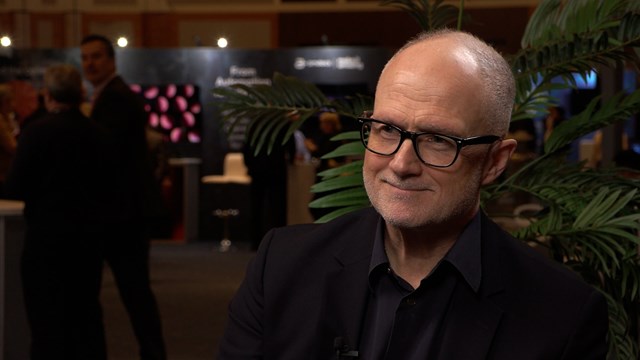
Neil McRae, CTIO, CityFibre
Neil McRae, chief technology and information officer (CTIO) at CityFibre, explains how the UK fibre-to-the-premises (FTTP) network operator is making use of artificial intelligence to increase efficiencies in its network operations, how it is constantly exploring how AI applications can improve the end user customer experience, and why it’s important to enthusiastically embrace the potential of AI.
Recorded April 2026
Email Newsletters
Sign up to receive TelecomTV's top news and videos, plus exclusive subscriber-only content direct to your inbox.