To embed our video on your website copy and paste the code below:
<iframe src="https://www.youtube.com/embed/Uz4jBS4DGZg?modestbranding=1&rel=0" width="970" height="546" frameborder="0" scrolling="auto" allowfullscreen></iframe>
Ray Le Maistre, TelecomTV (00:05):
So we're in London. We're at Future Net World 2026. I'm here with Laurent Leboucher. He is group CTO and EVP of networks at Orange. Laurent, great to see you again. Thanks very much for joining us.
Laurent Leboucher, Orange (00:17):
Hello, Ray. Happy to be with you.
Ray Le Maistre, TelecomTV (00:20):
So at this event, a lot of focus on automated networks, on the use of AI, but also how that is going to impact the companies in this industry. What do network operators such as Orange need to do in terms of transforming themselves as a business in order to survive and thrive in the AI era? What needs to be put in place to enable the continuous evolution of telecom operator capabilities?
Laurent Leboucher, Orange (00:55):
Well, it's a very large question,
Ray Le Maistre, TelecomTV (00:56):
Of course.
Laurent Leboucher, Orange (00:58):
So you know that we have now a new strategic plan in Orange that will guide us during the next three years. And as part of that, there are three major pillars, key pillars. And this is very interesting to see that network and the evolution of network will support the three key pillars, meaning being very focused on customer intimacy. And of course here AI will play a very important role, innovative growth and here as well, because we think that we need to deliver the best connectivity to support the new AI use cases. So innovative growth, and last but not least, scale and excellence at scale, and how we can take all the benefits of AI to transform the operating model, to make it much more efficient, and also to leverage the scale of the group. And this is what is behind.
Ray Le Maistre, TelecomTV (02:03):
So I guess as well, it must be quite challenging for companies as large as Orange with a lot of staff, a lot of networks, a lot of territories to transform, to change a company around, to move a ship and turn it around in any way. That must take a long time and a lot of efforts.
Laurent Leboucher, Orange (02:23):
That's definitely true. A company like Orange is made of very diverse and rich operations in different countries. And of course, we need to take into account that those differences, different level of maturity, different skills. At the same time, we consider that there is an opportunity really to create scale and to agree on a set of blueprints altogether. And that's what we are doing. And this is really part of the plan. As an example, we have agreed to use and leverage a common telco cloud, as I said, Orange Telco Cloud for our telco workflows. We have also agreed to leverage and transform the way we operate from a NOC. And we have a NOC that we are transforming into a smart NOC in Europe and France. We are doing the same in Africa and Middle East, and we are introducing a consistent way of doing CI/CD and continuous operation using exactly the same tooling.
(03:45):
So basically what we are trying to do, we are platforming the network. At the same time, we take into account the difference, the local differences.
Ray Le Maistre, TelecomTV (03:56):
Now you mentioned there that AI will play a key role and the networks will play a key role in underpinning those three pillars. And for a while now, you've been talking about looking at AI for telcos in two sides of the same coin, AI for networks and networks for AI. Has that changed in the past year and a half that you've been talking about this? Have your thoughts evolved? Is there anything different? Because things are moving very quickly, so I guess strategies have to move as well as the environment changes.
Laurent Leboucher, Orange (04:35):
So I believe I started to speak about that, the two sides of the coin maybe two years ago, and I think it's still valid today. It's still very valid. I would say that we are extremely focused on AI for network on different set of use cases I can explain, but in the long run, what will be absolutely critical also is to make sure that we deliver the best experience for each use cases and especially each AI based use cases. Because you know that by 2030, maybe at least two-thirds of the traffic will be AI-based.
Ray Le Maistre, TelecomTV (05:19):
And I guess particularly in the radio access network, at a time when you're thinking about how 5G is evolving and how the architecture of the RAN is changing, you must be planning for 2030 right now in the way you're architecting the IT that supports the RAN as well, I guess.
Laurent Leboucher, Orange (05:43):
Yes. We are progressing in different direction. First of all, we are looking at how we can transform the existing SYSAN platform, which by the way, is already at large scale within Orange, because we have more than 20 countries using and leveraging the same platform. And we will transform. This is ongoing and we are doing that right now. We will transform this platform into an SMO using the best frameworks we can find. So we have decided to look at all the options provided by our partners and we'll select one very soon, and it will be very open to address AI-based use cases.
Ray Le Maistre, TelecomTV (06:40):
And that openness, I guess, is key to enabling you to do what you need to do in the future?
Laurent Leboucher, Orange (06:46):
Absolutely. Specifically on the AI use cases, we are extremely focused on energy consumption and how you can balance energy consumption and user experience and being able to reduce significantly the energy consumption. But at the same time, without touching at all, the experience is really the challenge we want to address.
Ray Le Maistre, TelecomTV (07:16):
Now, Orange's also, for a few years now, been developing its telco cloud platform. Has that reached a stage now where it's gone from tests and trials and POCs into supporting the commercial networks and the day-to-day operations? Or are you close to that now with your Telco Cloud?
Laurent Leboucher, Orange (07:39):
So definitely, I think now we are really in the execution phase. Our telco cloud platform, which is called Orange Telco Cloud, now is available in 21 different countries in the group. So that means that we already have a pretty significant scale, and we are now addressing very critical workload, network workload. So we are moving typically core network functions, both on fixed, but also mobile, and also IMS and voice on this platform, and very focused on transforming the way we operate thanks to this new platform, and also thanks to the new way to do CI, CD, and continuous operation on top of this platform.
Ray Le Maistre, TelecomTV (08:38):
And then just to swing back to AI for a minute, a couple of years ago, you were in London and talking about your approach to AI. And at that time, you mentioned that you were engaging with a number of the different large language model developers to see which ones were best suited to what made sense for you on an operational basis. Where is Orange in terms of its interactions and use with the major AI models? And to what extent are you developing internally agentic AI capabilities or is that something that you're working with external companies on as well?
Laurent Leboucher, Orange (09:22):
We are at the beginning of the journey in terms of using agentic and using also generative AI, to be honest. However, we have now started to implement it in different use cases for real. We are using it in order to help, for instance, network operation engineer in the way they do root cause analysis, in the way they understand and capture a lot of incidents and be able to understand them very quickly. We are also starting to use it also in order to help also technicians on the ground in their day-to-day activities, and we are preparing to use some of these use cases also in order to protect our network, because we believe that there is also some very interesting use cases in how we can help automatically protect the network. We are, however, extremely cautious whenever it's about acting directly on the network, because there is a risk that if we are not completely safe, there is a risk of hallucination and we want absolutely to prevent that risk.
(10:59):
And last but not least, we need also at the same time in some countries to make sure that we stay completely compliant with local regulation. Having said that, we are working with most of the LLMs on the market. We don't train our own models internally.
Ray Le Maistre, TelecomTV (11:26):
And I guess the companies you are interacting with, hopefully there's some European companies involved there because the sovereign SEO obviously is becoming a much bigger thing. And it would seem that France is quite a hotbed with Mistral of European AI development. So I guess Mistral AI is hopefully one of your partners, I would imagine.
Laurent Leboucher, Orange (11:47):
Yes, we have engaged definitely with Mistral AI, but I'd like also maybe to come back on what you call sovereignty. Sovereignty doesn't mean that everything has to be made in Europe or in France. We have to be pragmatic and we consider that sovereignty for us is the way we build the stack so that we keep some control points and we are able to change and we are not stuck with one solution. And if we need, we are able to move. So for instance, we are doing that on the cloud and we leverage Sylva and Sylva allows us to change the distribution if we need. And we are doing that also with models and we don't want to rely on just one model. And we are very keen also to use and leverage open-weight model whenever we can.
Ray Le Maistre, TelecomTV (12:45):
Obviously you've talked about AI for networks, but there's also AI for business because there's a need for telcos to be able to develop new business opportunities with AI and that has to be helped and supported by the networks and the kind of decisions that your group takes. So what can AI do to help drive new revenues at telcos as well as help with operational efficiencies? And is there an opportunity, for example, in AI voice? Everybody's talked for years, voice is dead, it's been lost to the WhatsApps and et cetera of the world, but is there now a chance for voice to be reclaimed by the telcos in the AI era?
Laurent Leboucher, Orange (13:34):
I'm glad you take this example. And by the way, there are a set of use cases, large set of use cases where we can help our customers. You know that recently we announced the evolution of our products to help the digital transformation of our business customers with Live Intelligence and with Live Intelligence Studio. But specifically on your question on voice, we consider that voice is a very strong asset. And we are not the only one, by the way. I think other large tech companies consider the same. And we want to enrich voice using AI to create very smart conversations. As an example, real-time translation or maybe a transcript of a meeting. I'm a salesperson. I want to call my customers. If they consent, I can record the conversation and I can do a transcript and maybe also a recap and automatically fit it into the CRM.
(14:53):
So this kind of use case is the kind of use case we want to implement very soon. So we are working specifically on good use cases.
Ray Le Maistre, TelecomTV (15:05):
So Laurent, you mentioned the Orange Telco Cloud earlier, and this is something that you've been developing for a few years now. Is that starting to actually underpin commercial operations and is this now becoming the norm at Orange to be using the Telco Cloud platform?
Laurent Leboucher, Orange (15:24):
It's a very good point because think about the experience, because the experience will make the difference. If you take a real-time translation, it has to be extremely smooth and you need to configure different parts of the stack. So you will not make it just in one change. You will need to do several changes in order to fix, maybe come back, roll back, and tune it in a little bit different way, and then at some point you will create the perfect experience, but that works only if you are able to do continuous integration, continuous deployment, and do A/B testing and so on. So this is not possible using the traditional techniques.
Ray Le Maistre, TelecomTV (16:21):
It is an exciting time for the telecom industry, I think. And I noted this morning that the opening session gave a very positive outlook that things are looking up, opportunities are growing again for telecom operators. And obviously TelecomTV, we hope that that's the case and we'll have many more years talking to yourselves and others about how these things are developing. So Laurent, thank you very much for joining us today. Great to talk to you as ever.
Laurent Leboucher, Orange (16:55):
Thank you for having me, Ray. Thanks a lot.
So we're in London. We're at Future Net World 2026. I'm here with Laurent Leboucher. He is group CTO and EVP of networks at Orange. Laurent, great to see you again. Thanks very much for joining us.
Laurent Leboucher, Orange (00:17):
Hello, Ray. Happy to be with you.
Ray Le Maistre, TelecomTV (00:20):
So at this event, a lot of focus on automated networks, on the use of AI, but also how that is going to impact the companies in this industry. What do network operators such as Orange need to do in terms of transforming themselves as a business in order to survive and thrive in the AI era? What needs to be put in place to enable the continuous evolution of telecom operator capabilities?
Laurent Leboucher, Orange (00:55):
Well, it's a very large question,
Ray Le Maistre, TelecomTV (00:56):
Of course.
Laurent Leboucher, Orange (00:58):
So you know that we have now a new strategic plan in Orange that will guide us during the next three years. And as part of that, there are three major pillars, key pillars. And this is very interesting to see that network and the evolution of network will support the three key pillars, meaning being very focused on customer intimacy. And of course here AI will play a very important role, innovative growth and here as well, because we think that we need to deliver the best connectivity to support the new AI use cases. So innovative growth, and last but not least, scale and excellence at scale, and how we can take all the benefits of AI to transform the operating model, to make it much more efficient, and also to leverage the scale of the group. And this is what is behind.
Ray Le Maistre, TelecomTV (02:03):
So I guess as well, it must be quite challenging for companies as large as Orange with a lot of staff, a lot of networks, a lot of territories to transform, to change a company around, to move a ship and turn it around in any way. That must take a long time and a lot of efforts.
Laurent Leboucher, Orange (02:23):
That's definitely true. A company like Orange is made of very diverse and rich operations in different countries. And of course, we need to take into account that those differences, different level of maturity, different skills. At the same time, we consider that there is an opportunity really to create scale and to agree on a set of blueprints altogether. And that's what we are doing. And this is really part of the plan. As an example, we have agreed to use and leverage a common telco cloud, as I said, Orange Telco Cloud for our telco workflows. We have also agreed to leverage and transform the way we operate from a NOC. And we have a NOC that we are transforming into a smart NOC in Europe and France. We are doing the same in Africa and Middle East, and we are introducing a consistent way of doing CI/CD and continuous operation using exactly the same tooling.
(03:45):
So basically what we are trying to do, we are platforming the network. At the same time, we take into account the difference, the local differences.
Ray Le Maistre, TelecomTV (03:56):
Now you mentioned there that AI will play a key role and the networks will play a key role in underpinning those three pillars. And for a while now, you've been talking about looking at AI for telcos in two sides of the same coin, AI for networks and networks for AI. Has that changed in the past year and a half that you've been talking about this? Have your thoughts evolved? Is there anything different? Because things are moving very quickly, so I guess strategies have to move as well as the environment changes.
Laurent Leboucher, Orange (04:35):
So I believe I started to speak about that, the two sides of the coin maybe two years ago, and I think it's still valid today. It's still very valid. I would say that we are extremely focused on AI for network on different set of use cases I can explain, but in the long run, what will be absolutely critical also is to make sure that we deliver the best experience for each use cases and especially each AI based use cases. Because you know that by 2030, maybe at least two-thirds of the traffic will be AI-based.
Ray Le Maistre, TelecomTV (05:19):
And I guess particularly in the radio access network, at a time when you're thinking about how 5G is evolving and how the architecture of the RAN is changing, you must be planning for 2030 right now in the way you're architecting the IT that supports the RAN as well, I guess.
Laurent Leboucher, Orange (05:43):
Yes. We are progressing in different direction. First of all, we are looking at how we can transform the existing SYSAN platform, which by the way, is already at large scale within Orange, because we have more than 20 countries using and leveraging the same platform. And we will transform. This is ongoing and we are doing that right now. We will transform this platform into an SMO using the best frameworks we can find. So we have decided to look at all the options provided by our partners and we'll select one very soon, and it will be very open to address AI-based use cases.
Ray Le Maistre, TelecomTV (06:40):
And that openness, I guess, is key to enabling you to do what you need to do in the future?
Laurent Leboucher, Orange (06:46):
Absolutely. Specifically on the AI use cases, we are extremely focused on energy consumption and how you can balance energy consumption and user experience and being able to reduce significantly the energy consumption. But at the same time, without touching at all, the experience is really the challenge we want to address.
Ray Le Maistre, TelecomTV (07:16):
Now, Orange's also, for a few years now, been developing its telco cloud platform. Has that reached a stage now where it's gone from tests and trials and POCs into supporting the commercial networks and the day-to-day operations? Or are you close to that now with your Telco Cloud?
Laurent Leboucher, Orange (07:39):
So definitely, I think now we are really in the execution phase. Our telco cloud platform, which is called Orange Telco Cloud, now is available in 21 different countries in the group. So that means that we already have a pretty significant scale, and we are now addressing very critical workload, network workload. So we are moving typically core network functions, both on fixed, but also mobile, and also IMS and voice on this platform, and very focused on transforming the way we operate thanks to this new platform, and also thanks to the new way to do CI, CD, and continuous operation on top of this platform.
Ray Le Maistre, TelecomTV (08:38):
And then just to swing back to AI for a minute, a couple of years ago, you were in London and talking about your approach to AI. And at that time, you mentioned that you were engaging with a number of the different large language model developers to see which ones were best suited to what made sense for you on an operational basis. Where is Orange in terms of its interactions and use with the major AI models? And to what extent are you developing internally agentic AI capabilities or is that something that you're working with external companies on as well?
Laurent Leboucher, Orange (09:22):
We are at the beginning of the journey in terms of using agentic and using also generative AI, to be honest. However, we have now started to implement it in different use cases for real. We are using it in order to help, for instance, network operation engineer in the way they do root cause analysis, in the way they understand and capture a lot of incidents and be able to understand them very quickly. We are also starting to use it also in order to help also technicians on the ground in their day-to-day activities, and we are preparing to use some of these use cases also in order to protect our network, because we believe that there is also some very interesting use cases in how we can help automatically protect the network. We are, however, extremely cautious whenever it's about acting directly on the network, because there is a risk that if we are not completely safe, there is a risk of hallucination and we want absolutely to prevent that risk.
(10:59):
And last but not least, we need also at the same time in some countries to make sure that we stay completely compliant with local regulation. Having said that, we are working with most of the LLMs on the market. We don't train our own models internally.
Ray Le Maistre, TelecomTV (11:26):
And I guess the companies you are interacting with, hopefully there's some European companies involved there because the sovereign SEO obviously is becoming a much bigger thing. And it would seem that France is quite a hotbed with Mistral of European AI development. So I guess Mistral AI is hopefully one of your partners, I would imagine.
Laurent Leboucher, Orange (11:47):
Yes, we have engaged definitely with Mistral AI, but I'd like also maybe to come back on what you call sovereignty. Sovereignty doesn't mean that everything has to be made in Europe or in France. We have to be pragmatic and we consider that sovereignty for us is the way we build the stack so that we keep some control points and we are able to change and we are not stuck with one solution. And if we need, we are able to move. So for instance, we are doing that on the cloud and we leverage Sylva and Sylva allows us to change the distribution if we need. And we are doing that also with models and we don't want to rely on just one model. And we are very keen also to use and leverage open-weight model whenever we can.
Ray Le Maistre, TelecomTV (12:45):
Obviously you've talked about AI for networks, but there's also AI for business because there's a need for telcos to be able to develop new business opportunities with AI and that has to be helped and supported by the networks and the kind of decisions that your group takes. So what can AI do to help drive new revenues at telcos as well as help with operational efficiencies? And is there an opportunity, for example, in AI voice? Everybody's talked for years, voice is dead, it's been lost to the WhatsApps and et cetera of the world, but is there now a chance for voice to be reclaimed by the telcos in the AI era?
Laurent Leboucher, Orange (13:34):
I'm glad you take this example. And by the way, there are a set of use cases, large set of use cases where we can help our customers. You know that recently we announced the evolution of our products to help the digital transformation of our business customers with Live Intelligence and with Live Intelligence Studio. But specifically on your question on voice, we consider that voice is a very strong asset. And we are not the only one, by the way. I think other large tech companies consider the same. And we want to enrich voice using AI to create very smart conversations. As an example, real-time translation or maybe a transcript of a meeting. I'm a salesperson. I want to call my customers. If they consent, I can record the conversation and I can do a transcript and maybe also a recap and automatically fit it into the CRM.
(14:53):
So this kind of use case is the kind of use case we want to implement very soon. So we are working specifically on good use cases.
Ray Le Maistre, TelecomTV (15:05):
So Laurent, you mentioned the Orange Telco Cloud earlier, and this is something that you've been developing for a few years now. Is that starting to actually underpin commercial operations and is this now becoming the norm at Orange to be using the Telco Cloud platform?
Laurent Leboucher, Orange (15:24):
It's a very good point because think about the experience, because the experience will make the difference. If you take a real-time translation, it has to be extremely smooth and you need to configure different parts of the stack. So you will not make it just in one change. You will need to do several changes in order to fix, maybe come back, roll back, and tune it in a little bit different way, and then at some point you will create the perfect experience, but that works only if you are able to do continuous integration, continuous deployment, and do A/B testing and so on. So this is not possible using the traditional techniques.
Ray Le Maistre, TelecomTV (16:21):
It is an exciting time for the telecom industry, I think. And I noted this morning that the opening session gave a very positive outlook that things are looking up, opportunities are growing again for telecom operators. And obviously TelecomTV, we hope that that's the case and we'll have many more years talking to yourselves and others about how these things are developing. So Laurent, thank you very much for joining us today. Great to talk to you as ever.
Laurent Leboucher, Orange (16:55):
Thank you for having me, Ray. Thanks a lot.
Please note that video transcripts are provided for reference only – content may vary from the published video or contain inaccuracies.
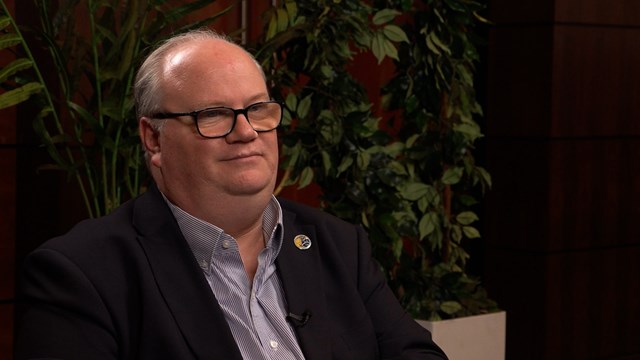
Laurent Leboucher, Group CTO and EVP Networks, Orange
Laurent Leboucher, group CTO and EVP of networks at Orange, explains how AI is underpinning the three key pillars of the telco’s new strategy, outlines the role that the Orange Telco Cloud is playing in transforming the company’s operations, and much more.
Recorded April 2026
Email Newsletters
Sign up to receive TelecomTV's top news and videos, plus exclusive subscriber-only content direct to your inbox.